Wasp Nest Removal in Summer is high-risk in Melbourne. Learn the warning signs, what to do right now, and how we remove nests safely and prevent return.
Summer is when most Melbourne households notice wasps. Activity ramps up fast, and nests can grow quietly in roof spaces, eaves, sheds, and garden areas.
As a licensed and fully insured Melbourne pest control team, we deal with wasps on-site every week through the warmer months. And in our experience, the biggest problems happen when people try to “just knock the nest down”.
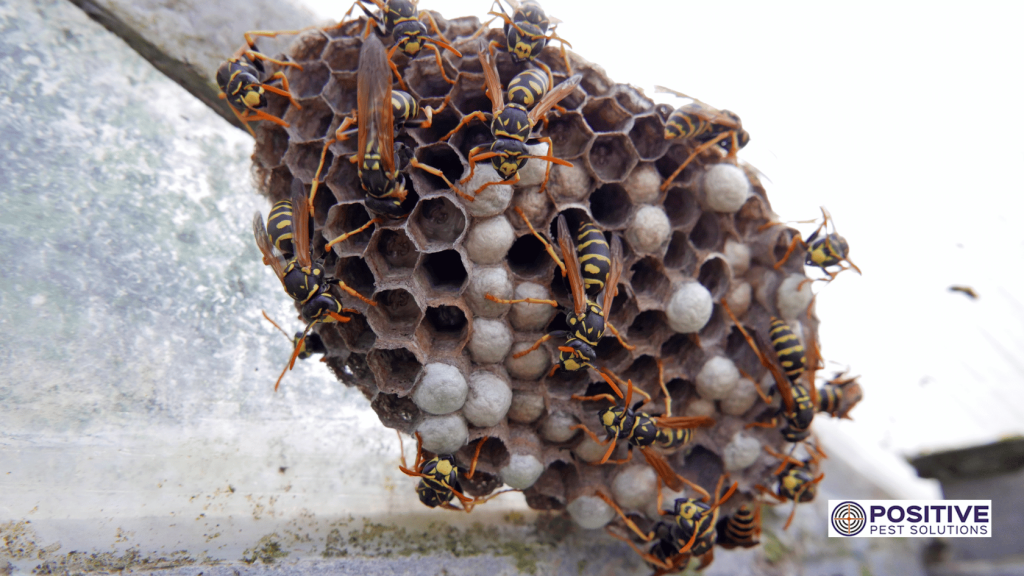
Why wasps become a bigger problem in summer?
Warm weather gives wasps the conditions they need to build and expand nests. Food is also easier to find, so they stay active for longer each day.
There are many different species of wasps in Australia, including thousands of native wasps. Some are beneficial in gardens because they help with pollination and reduce other plant pests. Others become serious home pests, especially when numbers build up around people, pets, and outdoor eating areas.
Recently, we’ve seen more nests found close to high-traffic parts of homes like patios, garages, and entry paths.
Also, refer to this article about What Melbourne Home Owners must know about Wasp Nests : Click Here
Wasp Nest Removal in Summer: when it’s urgent
Some situations can wait a short time. Others should not.
Treat it as urgent if:
- The nest is near a doorway, play area, deck, or pool
- Wasps are entering roof voids or wall cavities
- You’ve had stings already
- You see aggressive “guard” behaviour near one spot
- You can hear buzzing in a wall or ceiling space
What we’ve seen consistently is that nests found in roof spaces often have more traffic than people expect.
Even a “small” entrance hole can hide a larger nest inside.
Signs you may have a nest on your property
Wasps are not always easy to track until the nest is established. Look for patterns, not just one or two insects.
Common signs include:
- Repeated wasp flight paths to the same spot
- Wasps disappearing into a gap under eaves or into a vent
- Increased activity around bins, pet food, or outdoor dining
- A papery-looking nest in a shed, tree, or under a ledge
Over the last few years, we’ve also noticed people confuse bees and wasps early on. That matters, because the safe approach can be different.
What to do immediately if you find a nest?
Your goal is to reduce risk until it’s treated. Do not try to “test” the nest by getting closer.
Do this instead:
- Keep everyone away from the area (including pets)
- Close nearby windows and doors
- Avoid mowing, whipper-snipping, or using loud tools near the nest
- Don’t spray household insecticide at the nest entrance
- Mark the area and use a different pathway if possible
We see this come up again and again: someone sprays the nest, wasps scatter, and the next person who walks past gets targeted. That’s how stings happen.
Why is DIY removal risky?
Removing a wasp nest and its stinging inhabitants is not easy. It can be extremely dangerous.
Wasps in a nest tend to feel threatened quickly. When they do, they can become abnormally aggressive and sting repeatedly.
Looking back, one mistake we see often is trying to remove the nest without treating it first. That usually triggers a defensive response from the whole colony.
A safer approach is to treat the nest together with the nesting wasps. Then, once activity stops, the nest can be removed to reduce the chance of future use.
How we remove wasp nests safely
At Positive Pest Solutions, we start by identifying what we’re dealing with. Not all “wasps” behave the same, and not all nests are accessible.
Generally, professional treatments use two main methods:
1) Nest drenching
This involves applying insecticide directly to the nest. It’s effective, but it’s also the more dangerous method because it can cause wasps to fly out and attempt to escape or attack.
If drenching is the right method, we use the correct protective gear, approach, and timing to reduce risk. Once the nest is fully treated and activity has stopped, we can knock down the nest to prevent it becoming a future harbour.
2) Nest dusting
This is usually less risky than drenching. It involves applying pest dust at the entrance/exit points so wasps carry it through the nest.
This may be repeated to ensure the surrounding nest area is covered properly. Depending on nest size and access, it can take time for full control, but it reduces direct confrontation with flying wasps.
Learn More about How we Handle Wasp Nest :Click Here
With our experience, we’ve found dusting especially useful for nests inside cavities where direct access is limited. The key is applying it correctly and not disturbing the nest during the process.
What happens after treatment?
Most people want the nest gone straight away. We understand that.
But removal should come after control, not before it. Once wasp activity has stopped, removing the nest helps:
- Reduce re-infestation risk
- Prevent another colony using the same site
- Give you confidence the area is safe again
We’ll also point out why the nest ended up there. That might be a gap under eaves, an opening into a wall cavity, or a sheltered spot near food sources.
How to reduce the chance of nests returning this summer
You can’t control every wasp that flies into your yard. But you can reduce the easy “nest sites” and attractants.
Practical prevention steps:
- Seal obvious gaps in eaves, vents, and wall entry points (once the nest is treated)
- Keep bins clean and lids closed
- Don’t leave pet food outside for long periods
- Pick up fallen fruit if you have fruit trees
- Check sheds and sheltered corners every few weeks during peak season
If you’ve had a nest before, do a quick scan early in summer. Catching it early usually means a simpler, safer job.
Do You Need Help with Wasps this summer?
Positive Pest Solutions is a licensed (L010674) and fully insured Melbourne pest control team. We identify the type of wasp, treat the nest safely, and remove it properly so you’re not dealing with repeat problems. If you’d like a free, no-obligation quote or a quick inspection, call 03 8594 1416 (Mon–Sat, 8am–9pm) or email info@positivepestsolutions.com.au.
Click Here to learn more about Our Wasp Nest Removal Services
FAQ
1.Can I remove a wasp nest myself in summer?
It’s possible, but it’s high-risk. In summer, colonies are active and defensive, and a DIY attempt can trigger aggressive stinging.
2.Should I knock the nest down at night?
We don’t recommend it. Even at night, wasps can react, and you may not remove the full colony inside cavities.
3.How do you tell the difference between bees and wasps?
Bees are usually rounder and hairier, and their behaviour is different. If you’re unsure, treat it as a safety issue and get it identified before doing anything.
4.How long does it take for a treated nest to become inactive?
It depends on the nest size, location, and method used. Some nests calm down quickly, while others (especially cavity nests) can take longer to fully resolve.
5.Will the wasps come back after removal?
They can, especially if the same access points remain open. That’s why we combine treatment, removal (when safe), and prevention advice.
If you’d like a low-pressure inspection or a quote for safe wasp nest removal, call 03 8594 1416 or email info@positivepestsolutions.com.au.